

Analysis of the Operating Principle of the High-Pressure Hydraulic Power End
Release Date:
2023-05-29 13:45
Source:
The high-pressure hydraulic power unit is a critical component of hydraulic transmission systems, primarily responsible for converting hydraulic energy into mechanical energy to drive mechanical motion. This paper provides an in-depth analysis of the operating principle of the high-pressure hydraulic power unit, aiming to enhance readers’ understanding of the working principles and structural characteristics of hydraulic transmission systems.
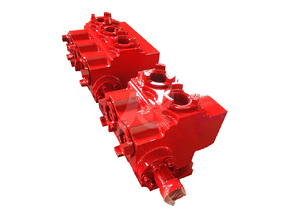
I. Structure of the High-Pressure Hydraulic End
The structure of the high-pressure hydraulic end primarily comprises a pressure chamber, a pressure cylinder, a cylinder head, a piston, a piston rod, a cylinder liner, and sealing elements. Specifically, the pressure chamber stores the fluid and generates pressure; the pressure cylinder converts hydraulic energy into mechanical energy; the cylinder head, piston, and piston rod serve to seal and transmit force; and the cylinder liner is used to secure the piston and sealing components.
II. Operating Principle of the High-Pressure Hydraulic End
The operating principle of the high-pressure hydraulic power unit is based on Pascal’s Law, which states that pressure applied to a confined fluid is transmitted equally in all directions. The unit comprises a pressurized oil tank, oil pump, valves, pressure chamber, piston, and pressure cylinder, and functions by using fluid flow to transmit force and control mechanical motion.
When the fluid enters the high-pressure hydraulic end, it is pressurized by the energy supplied by the oil pump and forced into the pressure chamber, thereby generating high pressure. This high pressure acts on the piston, driving it toward the pressure cylinder. As the fluid flows under high pressure, both its flow rate and pressure will change; valves are adjusted as needed to control these parameters.
The control valves in the high-pressure hydraulic power section come in various types, including check valves, pressure valves, flow valves, and speed-control valves. By combining these valves, different control functions can be achieved in the hydraulic system.
During operation of the high-pressure hydraulic power unit, friction and heat generated by fluid flow can adversely affect the system; therefore, cooling and lubrication are essential. At the same time, to ensure system safety and stability, continuous monitoring and control are required to prevent overloading and failures. In the course of operation, fluid enters the pressure chamber and then the pressure cylinder, where it builds up pressure and drives the piston’s motion. The piston rod, via seals, transmits this pressure to the mechanical components, thereby actuating the desired mechanical movement. When the pressure in the pressure chamber reaches a predetermined threshold, excess fluid is discharged through the relief valve on the cylinder head, thus safeguarding the hydraulic system’s safety and stability.
III. Application Areas of the High-Pressure Hydraulic End
High-pressure hydraulic power units are widely used in various industrial and mechanical applications, including metallurgy, mining, shipbuilding, machine tools, construction, and the military. Their advantages include the ability to withstand high pressures and heavy loads, as well as high reliability, fast response, and high precision, making them well suited to meet the demands of high-precision, high-load, and high-speed operations.
In summary, the high-pressure hydraulic power unit is a critical component of the hydraulic transmission system, and its operating principles and structural characteristics must be thoroughly understood. Regular maintenance and servicing are essential for ensuring the proper operation and extending the service life of the high-pressure hydraulic power unit, and should therefore be given utmost attention. Only by performing comprehensive maintenance can the safety, stability, and efficiency of the hydraulic system be guaranteed.
Recommended Articles
Service Hotline:
+86 (0)-510-86979095
Fax: +86 (0) 510 8623 7108
Email: info@jkpetro.com
Add: No.527 Shashan Street, Zhouzhuang Town, Jiangyin, Jiangsu, P.R.C